Why Does My Blood Sugar Spike After Exercise? (The 14.2 to 5.3 A1c Lesson)

When I started my journey, my HbA1c was a staggering 14.2%. My Random Blood Sugar (RBS) was consistently over 400 mg/dL. Naturally, I thought exercise was the magic "delete" button for high glucose.
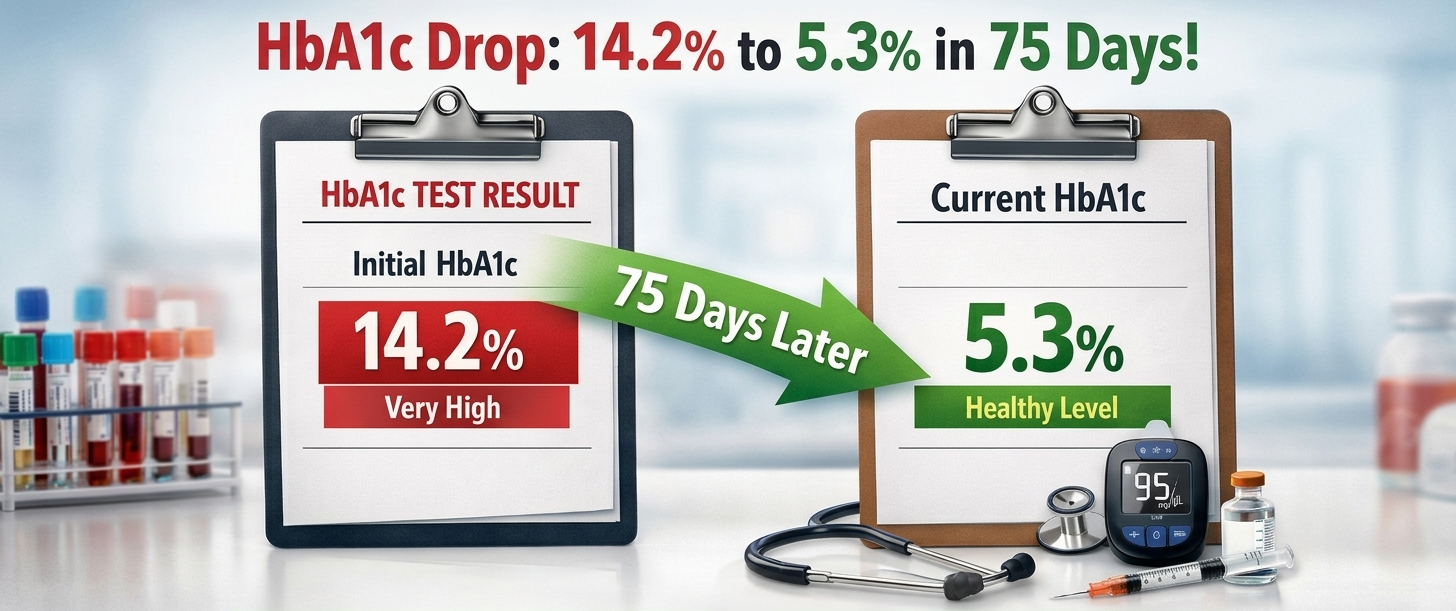
HbA1c blood test result showing 14.2 to 5.3 percent drop in 75 daysBut when I strapped on a Continuous Glucose Monitor (CGM) on day one, I saw something terrifying: my blood sugar actually went UP after my workout.
If you’ve seen your glucose monitor climb after a gym session, don't panic. You aren't "failing" at your diabetes reversal; you’re witnessing a natural biological process called a liver dump. Here is how I mastered my metabolic response to drop my A1c to 5.3% in just 75 days.
Understanding the "Liver Dump" (Gluconeogenesis)
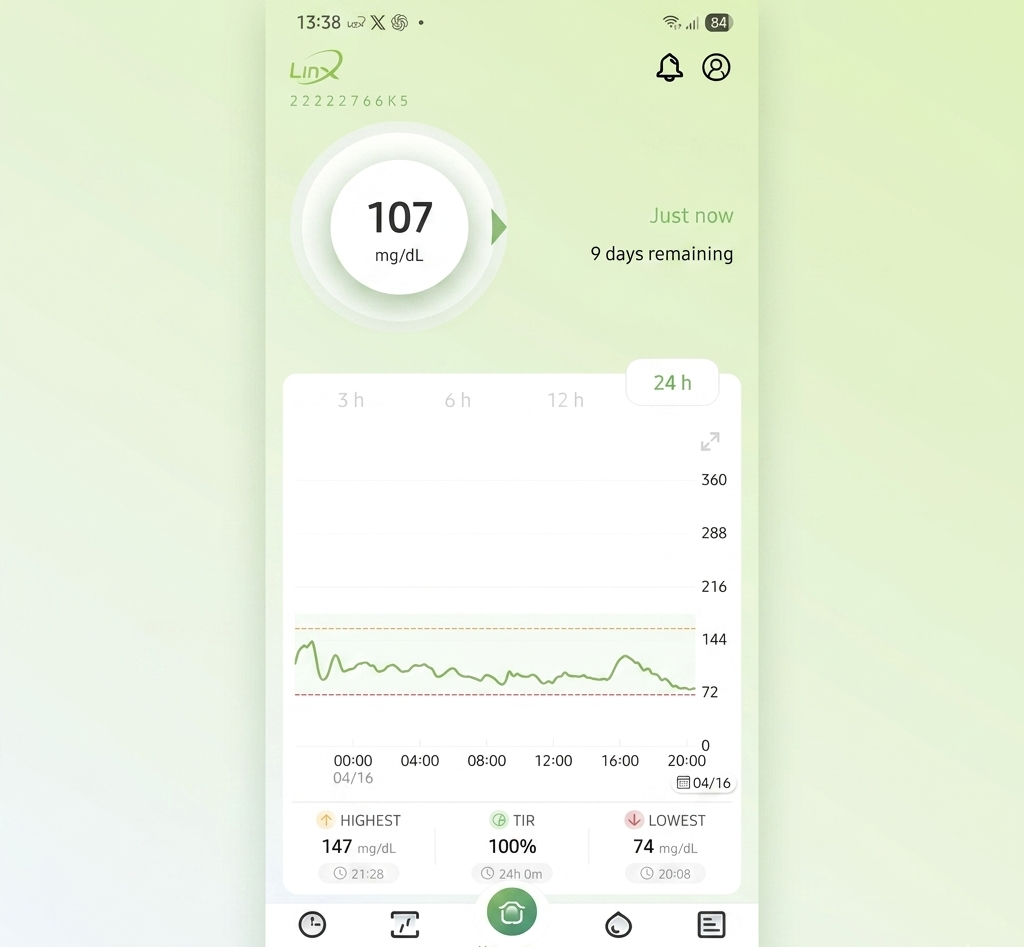
Real-time CGM data showing post-exercise glucose spike and recoveryMost generic health advice tells you that exercise lowers blood sugar. While true in the long term, high-intensity movement is a "stressor." When you push your body, your sympathetic nervous system triggers a "fight or flight" response.
This signals your liver to release stored glucose (glycogenolysis) or create new glucose (gluconeogenesis) to fuel your muscles. In a metabolically healthy person, insulin clears this surge immediately. But with a high A1c, that "sponge" is full. The sugar stays in your blood, causing that frustrating post-workout spike.
My "15 + 15" Protocol: The Sweet Spot for Insulin Sensitivity
Through my 15-day CGM experiment, I discovered that heavy cardio was my enemy, but "micro-movements" were my cure. I stopped the heavy lifting and switched to a daily 30-minute split:
- 15 Minutes of Light Strength Training: I focused on bodyweight movements to build the muscle "sink" that soaks up glucose.
- 15 Minutes of Brisk Walking: This acts as a mechanical mop, clearing the blood sugar surge created by the strength training.
Empty Stomach vs. Post-Meal: Which is Better?
I tested both. Walking on an empty stomach helped improve my morning fasting numbers, which eventually stabilized in the 90s after a brief period of adjustment. Walking post-meal (within 30 minutes of my "Big Meal") was the most effective way to blunt the spike from my brown rice or sweet potato portions. Both strategies work—the key is the 15-minute duration.
The Secret Barrier: ACV and the "Cucumber Buffer"
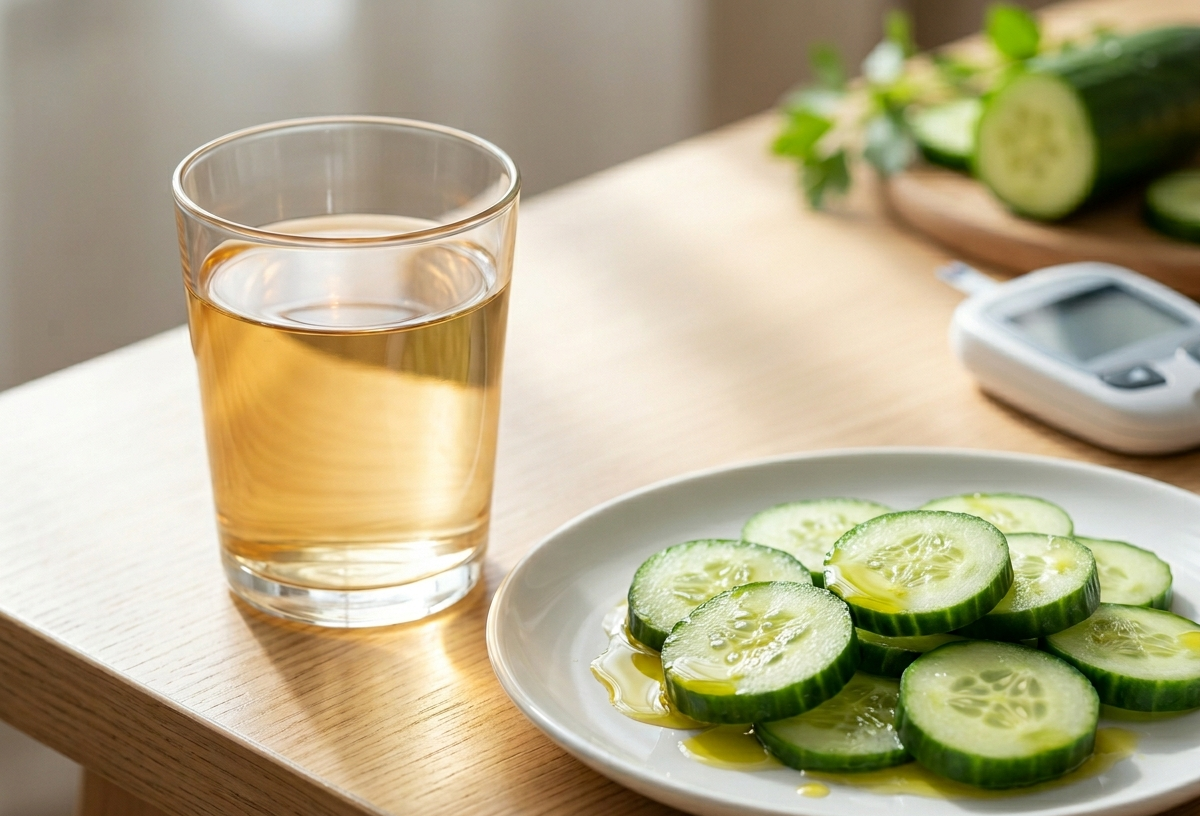
Apple cider vinegar water and unpeeled cucumbers with olive oil as a glucose-blocking starterYou cannot out-walk a bad food order. Before my workouts or my largest meal, I used a physiological "shield" to ensure my glucose remained stable:
- The Acid Prep: One large glass of water with Apple Cider Vinegar (ACV) 15 minutes before eating. The acetic acid tells your muscles to uptake glucose faster.
- The Fiber Starter: Unpeeled cucumbers with 1 tsp of olive oil. The fiber creates a physical mesh in the gut, while the fat slows down gastric emptying.
- The Protein Pivot: Small portions of high-density proteins like beef, lamb, or chicken.
- The Complex Carb: Only after the above steps would I touch brown rice or sugar-free bread.
The Maintenance Phase: Life at 5.3%
Today, I am no longer in "crisis mode." I eat three meals a day. I even enjoy the occasional dark chocolate Toblerone. Because I used the CGM to learn my body’s unique "spiking triggers" early on, I now have the metabolic flexibility to live a normal life without the 14.2% fear.
FAQs.
- Q: Is it normal for blood sugar to go up after exercise?
- A: Yes, it is often a "liver dump" (gluconeogenesis) triggered by exercise stress.
- Q: What is the best exercise for lowering A1c?
- A: Moderate, consistent activity—specifically the 15+15 protocol of strength training followed by steady walking—is often superior to high-intensity cardio for those with insulin resistance.